


muduo的並發模型為one loop per thread+ threadpool。為了方便使用,muduo封裝了EventLoop和Thread為EventLoopThread,為了方便使用線程池,又把EventLoopThread封裝為EventLoopThreadPool。所以這篇博文並沒有涉及到新鮮的技術,但是也有一些封裝和邏輯方面的注意點需要我們去分析和理解。
EventLoopThread
任何一個線程,只要創建並運行了EventLoop,就是一個IO線程。 EventLoopThread類就是一個封裝好了的IO線程。
EventLoopThread的工作流程為:
1、在主線程創建EventLoopThread對象。
2、主線程調用EventLoopThread.start(),啟動EventLoopThread中的線程(稱為IO線程),並且主線程要等待IO線程創建完成EventLoop對象。
3、IO線程調用threadFunc創建EventLoop對象。通知主線程已經創建完成。
4、主線程返回創建的EventLoop對象。
EventLoopThread.h
class EventLoopThread : boost::noncopyable
{
 public:
  typedef boost::function ThreadInitCallback;

  EventLoopThread(const ThreadInitCallback& cb = ThreadInitCallback());
  ~EventLoopThread();
  EventLoop* startLoop();	// 啟動線程,該線程就成為了IO線程

 private:
  void threadFunc();		// 線程函數

  EventLoop* loop_;			// loop_指針指向一個EventLoop對象
  bool exiting_;
  Thread thread_;
  MutexLock mutex_;
  Condition cond_;
  ThreadInitCallback callback_;		// 回調函數在EventLoop::loop事件循環之前被調用
};
EventLoopThread.cc
EventLoopThread::EventLoopThread(const ThreadInitCallback& cb)
  : loop_(NULL),
    exiting_(false),
    thread_(boost::bind(&EventLoopThread::threadFunc, this)),
    mutex_(),
    cond_(mutex_),
    callback_(cb)
{
}

EventLoopThread::~EventLoopThread()
{
  exiting_ = true;
  loop_->quit();		// 退出IO線程,讓IO線程的loop循環退出,從而退出了IO線程
  thread_.join(); //等待線程退出
}

EventLoop* EventLoopThread::startLoop()
{
  assert(!thread_.started());
  thread_.start();//線程啟動,調用threadFunc()

  {
    MutexLockGuard lock(mutex_);
    while (loop_ == NULL)
    {
      cond_.wait();//需要等待EventLoop對象的創建
    }
  }

  return loop_;
}

void EventLoopThread::threadFunc()
{
  EventLoop loop;

  if (callback_)
  {
    callback_(&loop);
  }

  {
    MutexLockGuard lock(mutex_);
    // loop_指針指向了一個棧上的對象,threadFunc函數退出之後,這個指針就失效了
    // threadFunc函數退出,就意味著線程退出了,EventLoopThread對象也就沒有存在的價值了。
    // 因而不會有什麼大的問題
    loop_ = &loop;
    cond_.notify(); //創建好,發送通知
  }

  loop.loop();// 會在這裡循環,直到EventLoopThread析構。此後不再使用loop_訪問EventLoop了
  //assert(exiting_);
}
測試程序:
#include#include #include using namespace muduo; using namespace muduo::net; void runInThread() { printf("runInThread(): pid = %d, tid = %d\n", getpid(), CurrentThread::tid()); } int main() { printf("main(): pid = %d, tid = %d\n", getpid(), CurrentThread::tid()); EventLoopThread loopThread; EventLoop* loop = loopThread.startLoop(); // 異步調用runInThread,即將runInThread添加到loop對象所在IO線程,讓該IO線程執行 loop->runInLoop(runInThread); sleep(1); // runAfter內部也調用了runInLoop,所以這裡也是異步調用 loop->runAfter(2, runInThread); sleep(3); loop->quit(); printf("exit main().\n"); }
對調用過程進行分析:(查看日志)
主線程調用 loop->runInLoop(runInThread); 由於主線程(不是IO線程)調用runInLoop, 故調用queueInLoop() 將runInThead 添加到隊列,然後wakeup() IO線程,IO線程在doPendingFunctors() 中取loop->runAfter() 要喚醒一下,此時只是執行runAfter() 添加了一個2s的定時器, 2s超時,timerfd_ 可讀,先handleRead()一下然後執行回調函數runInThread()。
那為什麼exit main() 之後wakeupFd_ 還會有可讀事件呢?那是因為EventLoopThead 棧上對象析構,在析構函數內 loop_ ->quit(), 由於不是在IO線程調用quit(),故也需要喚醒一下,IO線程才能從poll 返回,這樣再次循環判斷 while (!quit_) 就能退出IO線程。
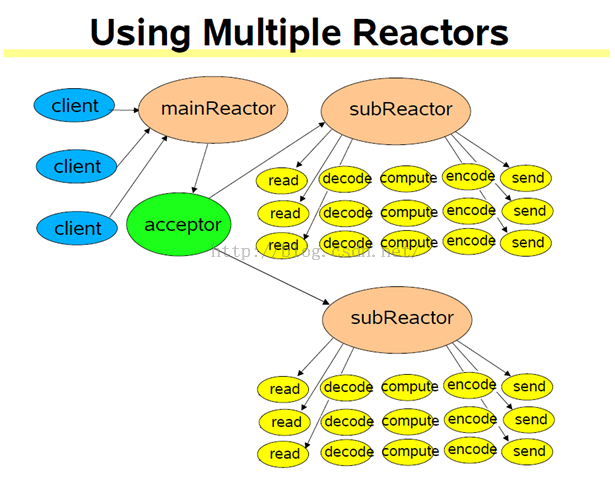
muduo的思想時eventLoop+thread pool,為了更方便使用,將EventLoopThread做了封裝。main reactor可以創建sub reactor,並發一些任務分發到sub reactor中去。EventLoopThreadPool的思想比較簡單,用一個main reactor創建EventLoopThreadPool。在EventLoopThreadPool中將EventLoop和Thread綁定,可以返回EventLoop對象來使用EventLoopThreadPool中的Thread。
EventLoopThreadPool.h
class EventLoopThreadPool : boost::noncopyable
{
 public:
  typedef boost::function ThreadInitCallback;

  EventLoopThreadPool(EventLoop* baseLoop);
  ~EventLoopThreadPool();
  void setThreadNum(int numThreads) { numThreads_ = numThreads; }
  void start(const ThreadInitCallback& cb = ThreadInitCallback());
  EventLoop* getNextLoop();

 private:

  EventLoop* baseLoop_;	// 與Acceptor所屬EventLoop相同
  bool started_;
  int numThreads_;		// 線程數
  int next_;			// 新連接到來,所選擇的EventLoop對象下標
  boost::ptr_vector threads_;		// IO線程列表
  std::vector loops_;					// EventLoop列表
};
EventLoopThreadPool.cc
EventLoopThreadPool::EventLoopThreadPool(EventLoop* baseLoop)
  : baseLoop_(baseLoop),
    started_(false),
    numThreads_(0),
    next_(0)
{
}

EventLoopThreadPool::~EventLoopThreadPool()
{
  // Don't delete loop, it's stack variable
}

void EventLoopThreadPool::start(const ThreadInitCallback& cb)
{
  assert(!started_);
  baseLoop_->assertInLoopThread();

  started_ = true;

  for (int i = 0; i < numThreads_; ++i)
  {
    EventLoopThread* t = new EventLoopThread(cb);
    threads_.push_back(t);
    loops_.push_back(t->startLoop());	// 啟動EventLoopThread線程,在進入事件循環之前,會調用cb
  }
  if (numThreads_ == 0 && cb)
  {
    // 只有一個EventLoop,在這個EventLoop進入事件循環之前,調用cb
    cb(baseLoop_);
  }
}

EventLoop* EventLoopThreadPool::getNextLoop()
{
  baseLoop_->assertInLoopThread();
  EventLoop* loop = baseLoop_;

  // 如果loops_為空,則loop指向baseLoop_
  // 如果不為空,按照round-robin(RR,輪叫)的調度方式選擇一個EventLoop
  if (!loops_.empty())
  {
    // round-robin
    loop = loops_[next_];
    ++next_;
    if (implicit_cast(next_) >= loops_.size())
    {
      next_ = 0;
    }
  }
  return loop;
}
mainReactor關注監聽事件,已連接套接字事件輪詢給線程池中的subReactors 處理,一個新的連接對應一個subReactor
我們采用round-robin(RR,輪叫)的調度方式選擇一個EventLoop,也就是getNextLoop函數。極端情況下,線程池中個數為0時,那麼新的連接交給mainReactor,這樣就退化成單線程的模式。