


這個系列整理 Linux 行程間通訊的方式:管道、訊息佇列、訊號、訊號量、共享記憶體與 socket。本篇談訊號量。
系列前文:管道、訊息佇列。
學過作業系統的人對訊號量不陌生,但要特別注意:訊號與訊號量是兩回事。
臨界區是加鎖區間內的那段程式碼;臨界資源則是同一時間只能被一個行程使用的資源。
把訊號量理解成一個計數器即可。它有初值(>0),行程要取得資源時執行 P 操作讓它減一;減到 0 代表資源用盡,其他行程必須等待;使用完畢後執行 V 操作加一,釋放資源。設定初值為 1 時,就是最常見的互斥鎖。
int semget(key_t key, int nsems, int semflg);
#include <sys/types.h>
#include <sys/ipc.h>
#include <sys/sem.h>
nsems 指定要建立幾個訊號量——semget 實際建立的是一個訊號量集,可理解為訊號量陣列。semflg 常用 IPC_CREAT 與 IPC_EXCL。
初始化是另一個函式,這也帶來一個實務上的缺點:
int semctl(int semid, int semnum, int cmd, ...);
semnum 指定要初始化集合中的第幾個(從 0 起算),cmd 傳 SETVAL,第四個參數則是下列联合体中的 val:
union semun {
    int val;                    /* Value for SETVAL */
    struct semid_ds *buf;       /* Buffer for IPC_STAT, IPC_SET */
    unsigned short *array;      /* Array for GETALL, SETALL */
    struct seminfo *__buf;      /* Buffer for IPC_INFO (Linux-specific) */
};
由於建立與初始化是兩個獨立動作,若行程 A 才剛建立尚未初始化,行程 B 就已經執行 P 操作,減一便會卡住——這是實際開發時很容易踩到的問題,實務上應由建立者完成初始化後再通知其他行程。
int semop(int semid, struct sembuf *sops, unsigned nsops);
#include <sys/types.h>
#include <sys/ipc.h>
#include <sys/sem.h>
nsops 表示這次要同時操作幾個訊號量,具體目標則寫在 sembuf 結構中:
struct sembuf {
    unsigned short sem_num;   /* 訊號量在集合中的索引 */
    short sem_op;             /* 1 為 V 操作,-1 為 P 操作 */
    short sem_flg;            /* 操作旗標 */
};
sem_flg 有兩個常見值:
同樣用 semctl,把 cmd 換成 IPC_RMID 即可,此時不需第四個參數。
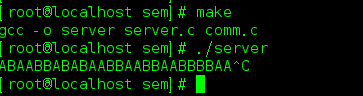
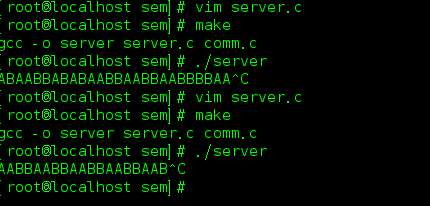
程式分為 comm.h、comm.c 與 server.c。父行程印 A、子行程印 B,未加鎖時會交錯;加上訊號量後則能各自連續輸出。
comm.h
#include <stdio.h>
#include <sys/ipc.h>
#include <string.h>
#include <unistd.h>
#include <sys/sem.h>
#include <stdlib.h>
#include <errno.h>

#define _PATH_NAME_ "/tmp"
#define _PROJ_ID_ 0x6666

static int comm_create_sem(int flags, int num);
int create_sem(int num);
int get_sem();
void P_sem(int sem_id, int index);
void V_sem(int sem_id, int index);
comm.c
#include "comm.h"

union semun {
    int val;
    struct semid_ds *buf;
    unsigned short *array;
    struct seminfo *__buf;
};

static int comm_create_sem(int flags, int num)
{
    key_t _key = ftok(_PATH_NAME_, _PROJ_ID_);
    if(_key < 0) {
        printf("%d:%s", errno, strerror(errno));
    }
    int sem_id;
    if((sem_id = semget(_key, num, flags)) < 0) {
        printf("semget errno,%d:%s", errno, strerror(errno));
    }
    return sem_id;
}

int create_sem(int num)
{
    int flags = IPC_CREAT | IPC_EXCL;
    int sem_id = comm_create_sem(flags, num);
    union semun v;
    v.val = 1;
    if(semctl(sem_id, 0, SETVAL, v) < 0)   // init
    {
        printf("init error,%d:%s", errno, strerror(errno));
    }
    return sem_id;
}

int get_sem()
{
    int flags = 0;
    return comm_create_sem(flags, 0);
}

void P_sem(int sem_id, int index)
{
    struct sembuf s;
    s.sem_num = index;
    s.sem_op = -1;
    s.sem_flg = 0;
    if(semop(sem_id, &s, 1) < 0) {
        printf("op error,%d:%s", errno, strerror(errno));
    }
}

void V_sem(int sem_id, int index)
{
    struct sembuf s;
    s.sem_num = index;
    s.sem_op = 1;
    s.sem_flg = 0;
    if(semop(sem_id, &s, 1) < 0) {
        printf("op error,%d:%s", errno, strerror(errno));
    }
}

void destory_sem(int sem_id)
{
    semctl(sem_id, 0, IPC_RMID);
}
server.c
#include "comm.h"

int main()
{
    int pid;
    pid = fork();
    if(pid > 0) {
        // father
        int sem_id = create_sem(1);
        while(1) {
            P_sem(sem_id, 0);
            printf("A"); fflush(stdout);
            sleep(1);
            printf("A"); fflush(stdout);
            V_sem(sem_id, 0);
        }
    } else {
        // child
        while(1) {
            int sem_id = get_sem();
            P_sem(sem_id, 0);
            printf("B"); fflush(stdout);
            sleep(1);
            printf("B"); fflush(stdout);
            V_sem(sem_id, 0);
        }
    }
    return 0;
}